Spring (March–May)
Spring in London arrives gradually, so don’t rush it. Wait until the last frosts have passed (usually mid-March in most of Greater London) before putting tender plants out.
- Feed and mulch borders in early March as growth begins. A layer of compost or well-rotted manure locks in moisture and suppresses weeds.
- Lawn care starts now — scarify to remove thatch, overseed bare patches, and begin mowing once grass is actively growing. Keep the blade high at first.
- Plant hardy annuals like sweet peas and poppies directly into the ground from late March.
- Divide perennials that have outgrown their space — hostas, geraniums, and grasses all respond well.
- Watch for slugs and snails, which thrive in London’s wet springs. Use copper tape, grit, or nematodes rather than pellets if you have pets or wildlife.
Summer (June–August)
London summers can swing between weeks of dry heat and prolonged grey spells. Flexibility is key.
- Water deeply but infrequently to encourage deep root growth. Early mornings are best to reduce evaporation and fungal risk. A water butt fed from your gutters saves money and is better for plants than tap water.
- Deadhead regularly — roses, dahlias, and bedding plants will flower far longer if spent blooms are removed weekly.
- Feed container plants every fortnight with a liquid feed; pots dry out fast on London’s sunny balconies and patios.
- Keep on top of weeding before weeds set seed. A hoe used on dry days is far quicker than hand-weeding in wet soil.
- Prune spring-flowering shrubs like forsythia and lilac straight after flowering to encourage next year’s blooms.
Autumn (September–November)
Autumn is arguably the most important season for a London gardener — the work you do now determines how your garden looks come spring.
- Plant spring bulbs from September onwards. Tulips do best planted in November to reduce the risk of tulip fire disease. Daffodils, alliums, and crocuses can go in earlier.
- Lift and store dahlias, cannas, and other tender tubers after the first frost blackens their foliage. London’s winters are rarely harsh enough to kill them outright, but it’s not worth the risk.
- Rake leaves promptly — wet leaf cover kills lawns quickly. Pile them into a wire cage to make leafmould, one of the best free mulches you can produce.
- Cut back perennials, though consider leaving seedheads on plants like echinacea and rudbeckia for birds and winter structure.
- Plant trees and shrubs — autumn is ideal as the soil is still warm but moisture is returning. Bare-root specimens (available from November) are cheaper and establish just as well as pot-grown ones.
Winter (December–February)
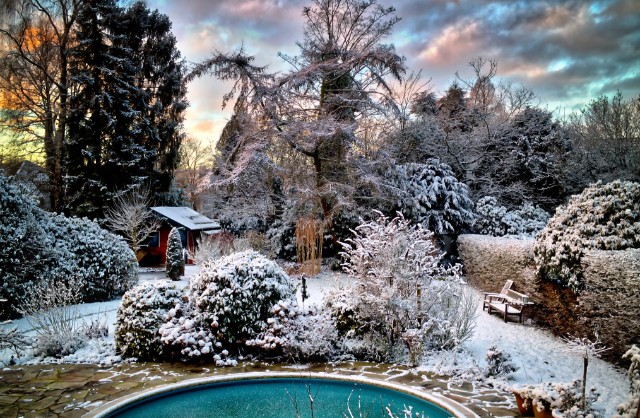
London winters are mostly cold and wet rather than snowy, which means there’s more to do outside than many people assume.
- Protect tender plants with fleece, straw, or bubble wrap during cold snaps. Most Mediterranean plants — lavender, rosemary, olive trees — survive London winters fine in a sheltered spot.
- Prune deciduous trees and shrubs while they’re dormant. This is the best time to reshape roses, apple trees, and wisteria (late January–February for wisteria).
- Check on stored bulbs and tubers monthly for signs of rot or desiccation.
- Plan and order seeds in January — popular varieties sell out fast. RHS Chelsea and Hampton Court Palace shows set the trends, but reputable seed catalogues offer far more variety.
- Improve your soil by digging in organic matter on beds that aren’t planted. Winter rain and frost will break it down naturally.
A Note on London’s Urban Climate
London’s urban heat island effect means the city is typically 2–3°C warmer than the surrounding countryside — a genuine advantage. Many plants that would struggle in rural Hertfordshire or Kent thrive in inner London gardens. It also means winters are milder and the growing season is slightly longer, so it’s worth experimenting with plants rated a zone hardier than your instinct might suggest.