London is one of the world’s great cities for gardens. From the grand Royal Parks to the millions of private plots tucked behind terraces, semis, and mansion blocks, green space is woven into the fabric of the city in a way that sets it apart from many other major capitals. And yet gardening in London comes with a particular set of challenges that anyone who has tried to maintain an outdoor space here will recognise quickly.
The soils are difficult, the spaces are often small and awkward, the light is compromised by surrounding buildings, and the pressures of urban life — from pollution to persistent pests — add layers of complexity that gardeners in more rural settings rarely face. Understanding these challenges clearly is the first step to overcoming them, and in most cases there are practical, proven solutions that transform even the most unpromising London plot into something genuinely beautiful and functional.
Heavy Clay Soil
Ask any experienced London gardener what their single biggest challenge is, and the answer is usually the same: the soil. Large parts of London sit on heavy London clay — a dense, sticky, and unforgiving growing medium that presents problems in every season. In winter and spring it becomes waterlogged, sitting cold and wet around plant roots and creating the anaerobic conditions that cause root rot. In summer, when it dries out, it contracts and cracks, becoming almost impenetrable and shedding water rather than absorbing it. Neither extreme is good for plants, and the constant cycle of waterlogging and drought puts even established specimens under serious stress.
The good news is that clay soil is not without its virtues. It is nutrient-rich and, once properly managed, can support excellent plant growth. The key is improving its structure consistently over time. Incorporating large quantities of organic matter — well-rotted garden compost, leaf mould, or composted bark — opens up the soil’s structure, improving both drainage and aeration. This is not a one-off job but an ongoing process; organic matter breaks down and needs replenishing annually.
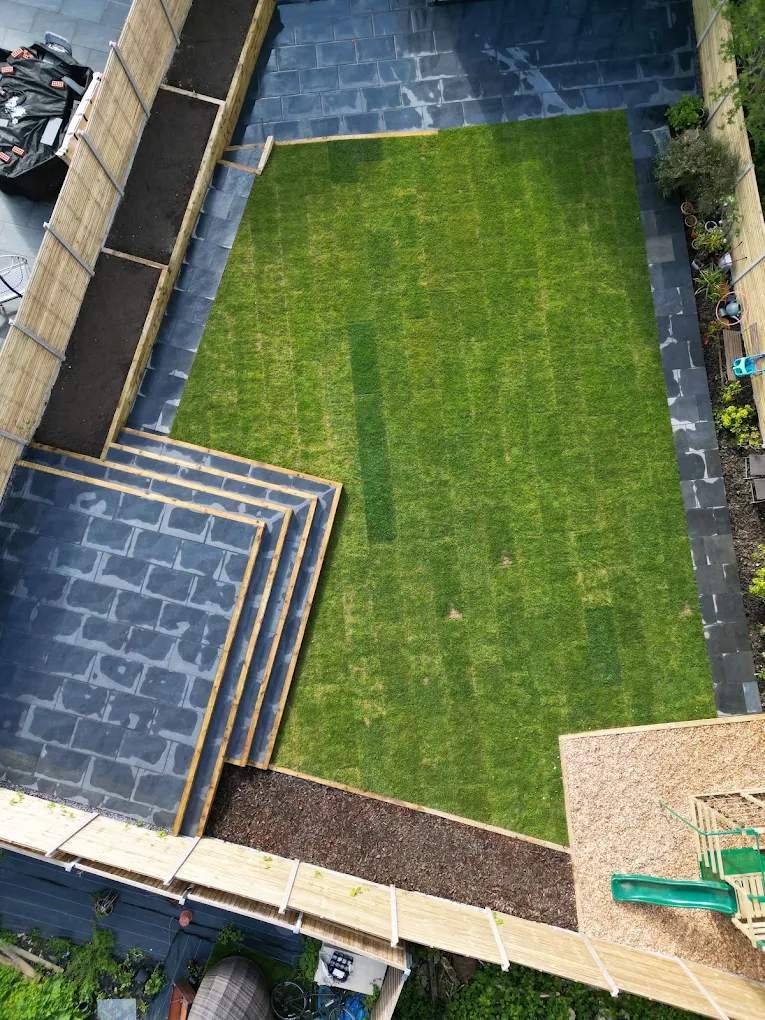
For new planting areas or beds, consider raising the level with imported topsoil and organic matter mixed together, effectively creating a better growing medium above the clay layer. Raised beds are an excellent solution in London gardens for exactly this reason — they give you complete control over the growing medium and sidestep the worst of the clay beneath entirely. For lawns, regular aeration using a garden fork or hollow-tine aerator punches holes through the compacted surface and allows water, air, and nutrients to penetrate more effectively.
Choosing the right plants also makes an enormous difference. Many excellent garden plants are naturally tolerant of heavy, moisture-retentive soils — roses, astilbes, hostas, ligularia, and many ornamental grasses all perform well in clay. Working with the soil’s natural characteristics rather than constantly fighting against them is the more sustainable and ultimately more rewarding approach.
Small and Awkward Spaces
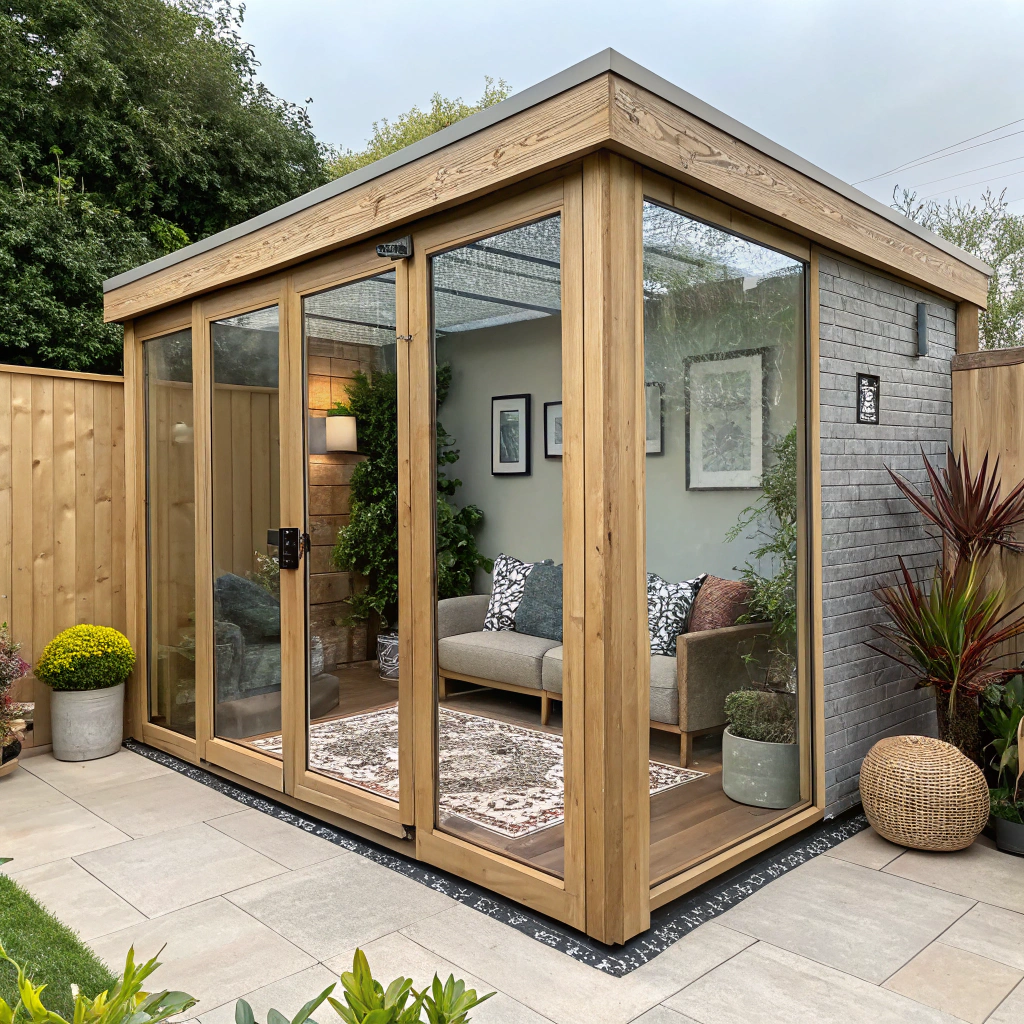
London gardens are, on the whole, small. The typical back garden of a Victorian or Edwardian terrace — the most common housing type across inner and much of outer London — is often no more than six to ten metres in length and five or six metres wide. Many properties, particularly flats and conversions, have no garden at all beyond a small patio, a balcony, or a shared communal space. Basement flats frequently have light wells or small below-ground courtyards that present their own particular set of challenges.
Working with small spaces requires a different design philosophy than larger gardens. Every element needs to earn its place. Clutter — too many pots, too many different plant varieties, too much furniture — makes a small space feel cramped and chaotic. Restraint and clarity of purpose are the guiding principles.
Vertical space is often underused in small London gardens and represents one of the most effective ways to add planting, interest, and even privacy without eating into the limited ground area. Climbers trained up walls and fences — clematis, roses, wisteria, hydrangea petiolaris — add height and lushness without footprint. Wall-mounted planters, espalier fruit trees, and living walls are all design tools that make productive use of vertical surfaces.
Built-in storage, seating that doubles as storage, and furniture that folds away when not in use are all practical ways to make small outdoor spaces more functional without compromising on planting. Mirrors, used carefully and positioned to reflect light and greenery, can create a convincing illusion of depth in very confined spaces. Pale paving and walls reflect more light and make areas feel larger and brighter than dark materials would.
For awkward shapes — long and narrow plots, L-shaped gardens, or plots with significant level changes — the solution is almost always to divide the space into distinct zones or rooms, each with its own character and purpose. This counterintuitively makes the garden feel larger, because you can’t see the whole thing at once and there is a sense of discovery as you move through it.
Shade and Light Limitation
Shade is one of the most common and frustrating challenges in London gardens. Dense urban development means that walls, fences, and neighbouring buildings cast shadow across many plots for significant parts of the day. North-facing gardens may receive direct sun only in midsummer. Even gardens with good overall light levels often have deeply shaded corners or borders that sit in shadow for most of the growing season.
The first step is to assess your garden’s light conditions honestly and at different times of year — a spot that gets decent sun in summer may be in deep shade from October to March when the sun is lower. This matters enormously when it comes to plant selection.
Fortunately, the palette of plants that perform well in shade is far wider and more beautiful than many people assume. Ferns, hostas, epimediums, hellebores, astrantia, foxgloves, and Solomon’s seal all thrive in shaded conditions and can produce genuinely lush, attractive planting schemes. Many climbers, including hydrangea petiolaris and several clematis varieties, are perfectly suited to north-facing walls. The mistake is to force sun-loving plants into shaded positions and wonder why they struggle.
Reflective surfaces can help make the most of available light. Pale walls, light-coloured paving, and well-placed mirrors all bounce light around shaded areas and make them feel brighter. Pruning or removing overhanging branches from trees and cutting back overgrown boundary shrubs can dramatically increase light levels — it’s worth assessing how much shade is coming from vegetation that could be managed before assuming the conditions are fixed.
Urban Pests and Wildlife
London’s urban wildlife is abundant and, from a gardener’s perspective, not always welcome. Foxes are present in significant numbers across the city and are notorious for digging up freshly planted beds, using lawns as latrines, and generally causing havoc in newly planted or carefully maintained gardens. Squirrels raid bird feeders, strip bark from young trees, and dig up newly planted bulbs with impressive thoroughness. Pigeons and parakeets — the latter increasingly common across south and west London — can decimate brassicas and other vulnerable plants overnight.
Managing urban wildlife requires a combination of physical deterrents and realistic expectations. For foxes, the most effective deterrents are physical barriers — burying wire mesh beneath newly seeded lawns, using chicken wire cloches over newly planted areas, and ensuring compost bins are properly secured. Ultrasonic deterrents have mixed reviews but work for some gardeners. The key is consistency; foxes are persistent and will return to any space they’ve previously found rewarding.
For squirrels and bulbs, the most reliable solution is to plant bulbs beneath a layer of wire mesh laid just below the soil surface, which prevents digging while allowing shoots to grow through in spring. Daffodils and alliums are largely ignored by squirrels, making them a sensible choice for London gardens where the problem is persistent. For pigeons and other birds, fine netting over vulnerable plants is the most reliable protection.
Slugs and snails deserve a mention of their own. London’s mild, damp climate is ideal for them, and they are present in enormous numbers in most urban gardens. Organic controls — copper tape around raised beds and containers, wildlife-friendly nematode treatments applied to the soil, and encouraging natural predators like hedgehogs, frogs, and birds — are effective when used consistently and are far preferable to chemical pellets in gardens visited by pets and children.
Poor Drainage and Flooding
London’s combination of heavy clay soils, high rainfall, and extensive hard surfacing creates serious drainage challenges in many gardens. Surface water has nowhere to go in gardens where large areas have been paved or decked over, leading to pooling, flooding, and the kind of saturated soil conditions that are deeply hostile to most plants. This problem has become more acute in recent years as extreme rainfall events have become more frequent.
The solutions begin with reducing hard surfacing wherever possible and replacing it with permeable alternatives — gravel, permeable block paving, or simply more planting. Every square metre of permeable surface helps. Where hard surfacing is necessary, ensuring it is properly graded to direct water away from buildings and towards planting areas or drainage points is essential.
French drains — gravel-filled trenches that collect and redirect surface water — are an effective solution for persistently waterlogged areas and can be installed relatively discreetly within planted borders. Soakaways, which allow water to percolate slowly into the ground below the clay layer, can relieve waterlogging in lawns and open areas. Rain gardens — planted depressions designed to collect and absorb surface water — are an increasingly popular and ecologically valuable solution that turns a drainage problem into a planting opportunity.
Pollution and Air Quality
London’s air quality, while improved dramatically from its mid-twentieth century lows, remains a challenge for gardens close to busy roads. Particulate pollution settles on leaf surfaces, blocking light absorption and clogging the stomata through which plants breathe. Salt from winter road treatments washes into roadside planting. Compacted, contaminated soils in gardens near heavily trafficked streets can contain elevated levels of heavy metals and other pollutants that affect plant health and root development.
Choosing pollution-tolerant plants for front gardens and street-facing borders makes a significant difference. Established performers in London’s roadside conditions include pittosporum, elaeagnus, osmanthus, and many ornamental grasses, all of which have proven resilience to urban air quality. Dense boundary hedging — privet, hornbeam, yew — not only tolerates pollution but actively filters particulates from the air, improving conditions for more sensitive plants behind it.
For soils with suspected contamination near busy roads, raised beds with clean imported growing medium are the safest approach for food growing in particular. Testing soil before growing edibles in high-traffic areas is a sensible precaution.
Conclusion
Every one of London’s gardening challenges has a solution — often several. The city’s gardeners have been working with and around these conditions for generations, and the results, seen in the extraordinary variety and quality of London’s private and public green spaces, speak for themselves. With the right knowledge, the right plants, and where necessary the right professional support, even the most challenging London plot can be transformed into an outdoor space that is genuinely beautiful, functional, and a pleasure to spend time in.